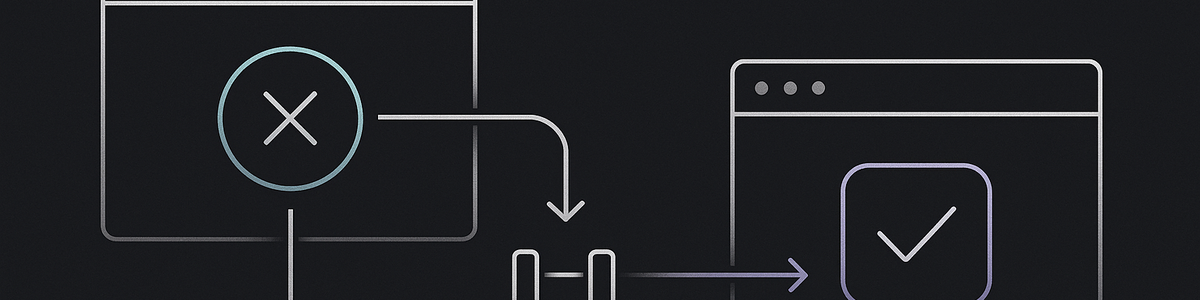
Design tiny experiments to reclaim focus
Most productivity advice asks for dramatic overhauls: new tools, new schedules, or a complete life reboot. That’s seductive because big changes feel decisive. But they’re also fragile and hard to sustain. There’s a quieter option that’s both easier to start and easier to keep: tiny experiments—small, time-boxed adjustments you run long enough to learn from, not long enough to make you miserable.
Why tiny experiments work
Tiny experiments sidestep two fatal flaws of typical productivity fixes. First, they reduce friction: when the ask is small, you actually do it. Second, they convert hope into data: instead of a vague promise to “be more focused,” you have a measured change and a clear signal about whether it helped.
Think of them like short A/B tests for your life. You don’t commit to a permanent change; you try something for a week or two, measure a simple outcome, and decide. Over time, the compounding wins are enormous—because small wins stack and because you get better at designing meaningful experiments.
Pick the right levers
Not all experiments are created equal. To keep results readable and actionable, constrain your test along three axes:
- Time: How long is the experiment? For micro-experiments, pick 3–14 days.
- Scope: What exactly changes? Be specific—”no notifications on desktop until 10:00″ beats “fewer distractions.”
- Measurement: What’s your outcome metric? It can be subjective (daily focus rating) or objective (number of deep-work sessions completed).
Simple experiments you can run this week
Here are five low-friction tests that reliably surface useful signals.
- Notification quarantine: Silence email/mobile notifications until after a 90-minute morning block. Measure the number of uninterrupted work sessions and a one-line end-of-day note about task progress.
- Micro-break cadence: Take a 30–60 second physical break every 25 minutes. Track perceived energy and how many hours you felt “in the zone.”
- One-decision morning: Reduce morning choices—preset breakfast, clothes, and the first two tasks. Track decision fatigue and morning completion rate.
- Commit-and-cut: Promise to try a single focused task for 50 minutes, then immediately switch to 10 minutes of a different activity—no multitasking. Count how many intervals you finish.
- Email triage block: Batch email to two 20-minute slots per day. Record total emails processed and whether urgent items felt delayed.
How to measure without making it a second job
If measurement feels onerous, make the outcome simple and fast. Two approaches work well:
- One-line end-of-day: Each evening jot a single line: what went well, what didn’t. It takes ten seconds and is gold for pattern recognition.
- Binary signal: Did you complete the intended focus block? Yes/No. Tally across days to see trends.
Turn findings into durable improvements
After your test window, ask three questions: Did the change improve the chosen metric? Was it sustainable? What costs did it introduce? If a test passes on metrics and cost, scale it—extend the window or embed the habit by pairing the action with a stable cue (a calendar event, a specific time, the end of a meeting).
If it fails, treat the result as information. A failure might mean the change was the wrong lever, the measurement was off, or context (meetings, team rhythms) made it impractical. Learn and design a follow-up experiment that addresses the failure mode.
A retail analogy: trial sizes, not product swaps
In retail, a smart buyer tests product quantities in small batches—trial sizes—to learn demand before committing shelf space. Tiny experiments are the same: test small, learn quickly, and only when the signal is clear do you expand the commitment. This approach reduces regret and keeps your personal operating system nimble.
When experiments collide with team norms
Single-person hacks are easy; team changes are trickier. When your experiment affects others, start by making the ask explicit: explain the short trial, what you’ll measure, and when you’ll revert or commit. Most teammates are more tolerant of temporary changes if they understand the hypothesis and timeline.
Two quick templates to steal
Use these when you don’t have time to design an experiment from scratch.
- 90-minute morning focus: Mute notifications, do two prioritized tasks in a 90-minute block, one-line summary at noon. Run 7 days.
- Micro-break cadence: 25/5 work/break rhythm for 10 sessions per day, record energy at day’s end. Run 5 days.
What real progress looks like
It’s not a sudden doubling of output. It’s fewer days where you feel scattered, more afternoons where you can actually finish the hard thing, and a growing library of experiments that reliably tilt your weeks. Over months, you’ll notice the compounding effect: the practices that survive are ones you barely notice doing anymore.
Final prompt to run an experiment
Pick one test above. Set a 7-day window. Pick a single metric—completion yes/no or a one-line daily log. Run the experiment, then review what the data tells you. Design your next experiment from the evidence, not from good intentions.
Small experiments aren’t glamorous, but they’re how meaningful, lasting change happens. If you want one companion experiment to try this week, pick the notification quarantine: the payoff for a tiny ask is often surprisingly large.